
Guides
Vehicle Dealer Management Software for Exporters: 2026 Guide
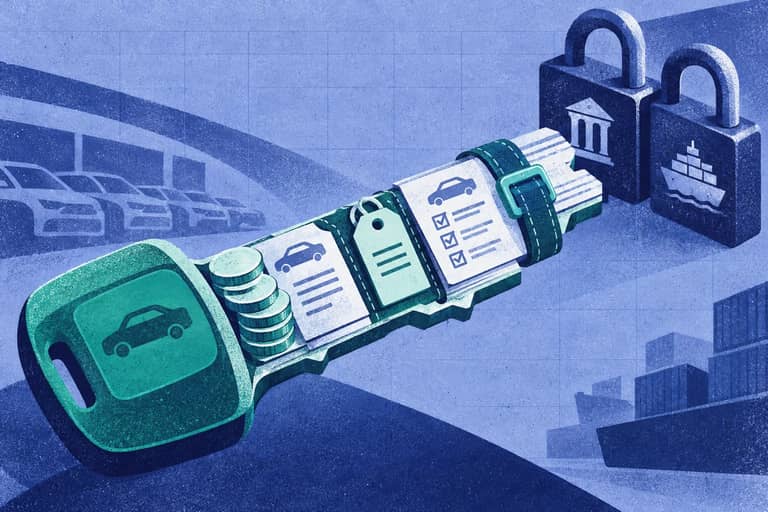
Vehicle dealer management software is the term dealers and exporters use for systems that coordinate inventory, customers and transactions in a shared record set. For export operations, the relevant question is whether that record set continues from purchase and stock control through booking, documentation and shipment.
The main finding is that a conventional dealer management system covers core dealership operations and shared records, while exporter focused systems add vehicle level cost control, shipment allocation and export document milestones. Software tracking remains distinct from approval by regulators and acceptance by carriers.
Japan and Korea focused examples show how vendors structure the workflow. Vendor descriptions cover auction data, inland transport, container assignment and booking status, while transport authority guidance and carrier advisories set separate requirements for deregistration certificates, expiry dates and carrier declarations for operational handoffs.
What Vehicle Dealer Management Software Does
What software do car dealers use is commonly answered with a dealer management system, described as a central software platform for coordinating core dealership operations and shared customer, vehicle and transaction records. The same guidance notes that a dealer management system may connect with separate customer relationship management, digital retail, inventory and analytics tools rather than replace every specialized system.
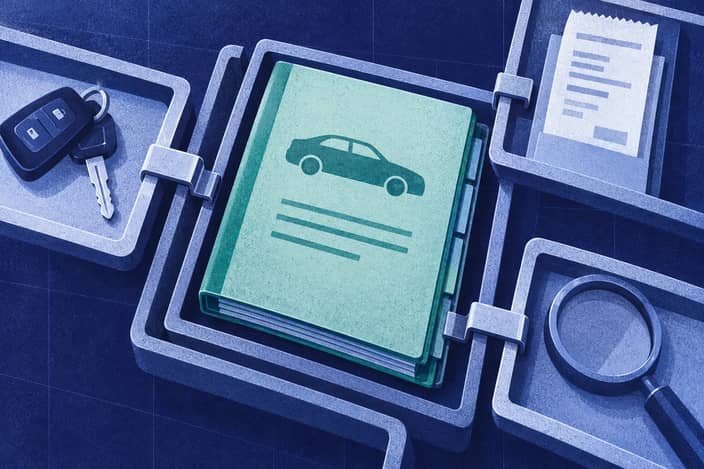
Inventory support is a standard component. Connected inventory tools may handle merchandising, pricing strategies and inventory performance, while Dealertrack describes its Vehicle Wizard add-on as automating inventory processes for new and used vehicles. Accounting functions can include general ledger management, accounts payable and receivable, financial statements and month end reporting.
Dealertrack also describes tracking transactions, account balances and dealership performance, and managing transactions and money owed. For an exporter, this baseline matters because domestic sales, inventory and accounting controls do not automatically provide export shipment logic, multi currency landed cost or vessel linkage.
Track Each Vehicle, Its Costs And Its Margin
Exporter workflows depend on a single vehicle file that accumulates purchase facts, additional costs and sale results. MSC describes a customizable cloud system for used car exporters in which vehicle management registers vehicle information from auction statements and stores required documents for progress management. Separate modules cover inland transport schedules, carriers and costs, and purchases and payment status.
DokoLink states that its JDocs ERP keeps information about each sold car in a cloud accessible file. Staff can enter auction expenses and transport costs, manage refunds and calculate profits. The system can generate pro forma invoices and track international remittances, which connects cost entry to billing and receipts.
AutoTradox Fleet Monitor describes vehicle records with make, model, chassis code, body type, color, fuel type and accessories. Its inventory functions also include assigning cars to containers and viewing stock status as available, in transit or sold. Export119 states that its inventory records are VIN tracked and can include purchase price and landed costs in multiple currencies, with photos, documents and Excel import and export.
The Korean language dealer workflow describes recording a vehicle VIN, seller and price, then adding transport, inspection and repair expenses to calculate the actual cost of the vehicle. Fleet Monitor lists vehicle level costs including purchase price, freight, forwarding and customs clearance, accessories, storage, insurance and port handling, and states that profit margin is calculated automatically in real time.
Across these descriptions, acquisition records lead to preparation and inland movement costs, followed by export logistics costs, with refunds, remittances and profit calculation forming the settlement result.
Connect Inventory To Booking And Shipment
The transition from stock to shipment is where exporter requirements diverge from domestic dealer processes. Fleet Monitor lists logistics and sales functions that include vessel schedules, booking confirmations, bill of lading numbers, export document storage, invoices and payment tracking. Its finance features include incoming receipts, supplier and operating payments, and payment allocation across vehicles and containers.
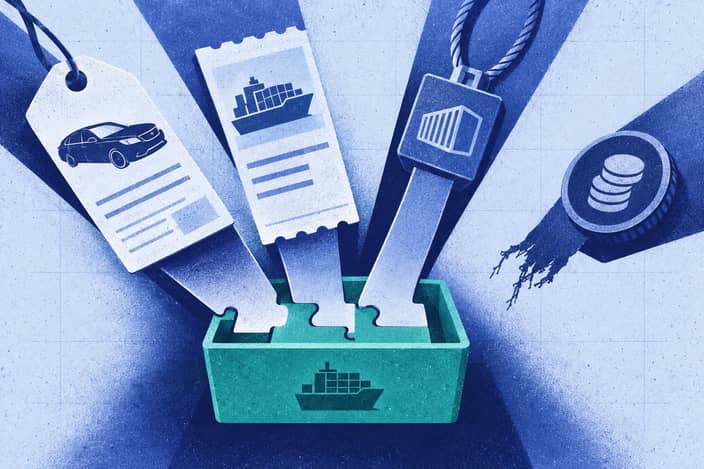
Export119 states that traders can book published container or RoRo schedules, enter an external booking and associate vehicles with a sailing. Its feature list also includes loading allocation, booking packets and capacity guards. That structure allows a vehicle record to retain its identity after it is assigned to a container or vessel sailing.
Status visibility supports handoffs between purchasing, documentation and logistics staff. Vendor descriptions list available, in transit and sold distinctions, container assignment and sailing association alongside stock, loading and invoicing functions. Payment allocation across vehicles and containers further links operational status to financial settlement.
Build Export Documents And Carrier Checks Into The Workflow
Software may record document status, but regulators and carriers set the underlying requirements. Japan transport authority guidance describes two export registration paths: provisional export deregistration for a registered vehicle, or an export plan notification certificate for a vehicle that has already been temporarily deregistered.
The same guidance states that provisional export deregistration can be applied for starting 6 months before the planned export date. It lists a ¥350 registration stamp fee per application and flags revised fees from April 1, 2026, so the current fee should be checked. At export inspection confirmation, Japan Customs requires a Certificate of Registration Deletion for a registered vehicle, or a Certificate of Notice of Planned Export for a vehicle already deregistered. Both certificates are valid for 6 months from issue.
Carrier rules add a separate layer. Under the CMA CGM Japan advisory, EVs and PHEVs must be declared as dangerous goods under the IMDG Code, and vehicles must be less than 7 years old from manufacture. The advisory requires a specific letter of indemnity and, for EVs, a third party survey report. It warns that improperly declared EVs or PHEVs may be discharged at the nearest port at customer cost. These are carrier requirements in the advisory, not universal legal requirements.
The same advisory states that booking and document descriptions should specify vehicle type rather than use a generic description such as USED VEHICLES. It requires a booking amendment if a complete vehicle is added after booking auto parts only. Cargo changes found at shipping instruction stage or by the carrier may incur a USD 2,000 misdeclaration fee under the cited advisory rule.
For workflow support, software may track Japan export status, planned export dates, required forms and documents, certificate issue and expiry dates, and carrier specific booking data and document status, including dangerous goods declarations, letters of indemnity, surveys, cargo amendments and request for information responses. These should be configurable workflow controls because recordkeeping and handoffs do not themselves satisfy regulator or carrier requirements. Export119 lists bill of lading parties, Shipping Instructions, draft bill of lading review and verified gross mass on an append only timeline, while its Korea focused dealer page describes deregistration, loading, export declaration and bill of lading as document milestones linked to vehicle records.
Evaluate The Software With An End-To-End Vehicle Test
As a proposed evaluation method, an exporter can follow one vehicle from sourcing to settlement and check how data moves between modules. The test can use an auction statement, cost invoices and a sailing scenario.
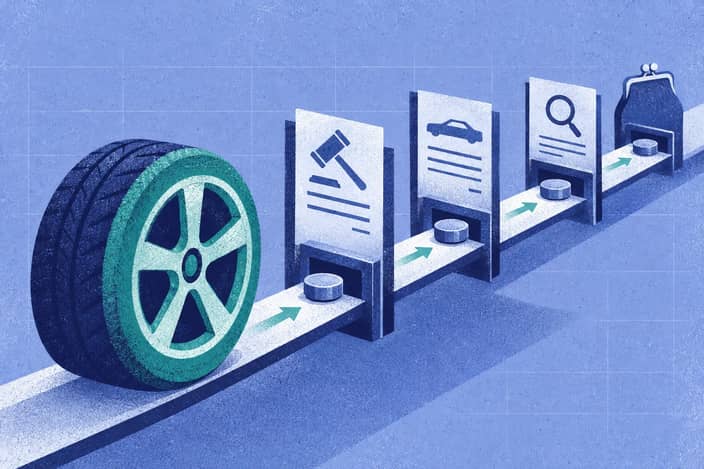
- The vehicle file is created from the auction statement, with VIN, seller, purchase price and supporting documents attached.
- Transport, inspection, repair, storage and inland movement costs are added in the applicable currencies, and the actual cost is reviewed.
- The vehicle is allocated to a container or RoRo sailing, with published or external booking details, loading allocation and capacity controls recorded.
- Export milestones are completed in sequence, including deregistration, loading, export declaration and bill of lading steps, with Shipping Instructions, draft review and verified gross mass status retained on the timeline.
- Japan specific controls are checked where applicable, including export registration path, certificate validity period, planned export date and carrier declarations for vehicle type, age and electric propulsion.
- Invoicing, receipts, supplier payments and payment allocation across vehicles and containers are reconciled to the vehicle margin.
In this proposed test, the exporter checks whether each vehicle retains its costs, documents and status from inventory through booking and shipment, and whether regulatory and carrier checks appear as required actions rather than assumed approvals.
Sources
- CDK Global — Dealer Management Systems: A Complete Guide for Dealers
- Dealertrack — Dealer Management System (DMS) Overview
- 株式会社エムエスシー (MSC) — 中古車輸出販売管理システム|MSC|株式会社エムエスシー
- DokoLink — JAS - Software for Japanese Vehicle Exporters | DokoLink
- AutoTradox Solutions — Fleet Monitor | Complete Software for Japanese Car Exporters & Trading Companies | AutoTradox Solutions
- Export119 — Features — Korean Car Export & Import Software | Export119
- Export119 — 차량 매입부터 이익 배분까지 — Export119
- Japan Ministry of Land, Infrastructure, Transport and Tourism, Tohoku Transport Bureau — 輸出に関する手続き (Export procedures)
- Japan Customs — 5502 Customs Procedures for Exporting Used Vehicles (FAQ)
- CMA CGM Japan K.K. — Important Notice on Vehicle and Auto Parts Shipment
Last updated: October 2026. Regulatory fees, certificate rules and carrier advisories change over time.