
Insights
South Korea September 2026 Vehicle Exports: New-Car Gains, Used-Car Slump
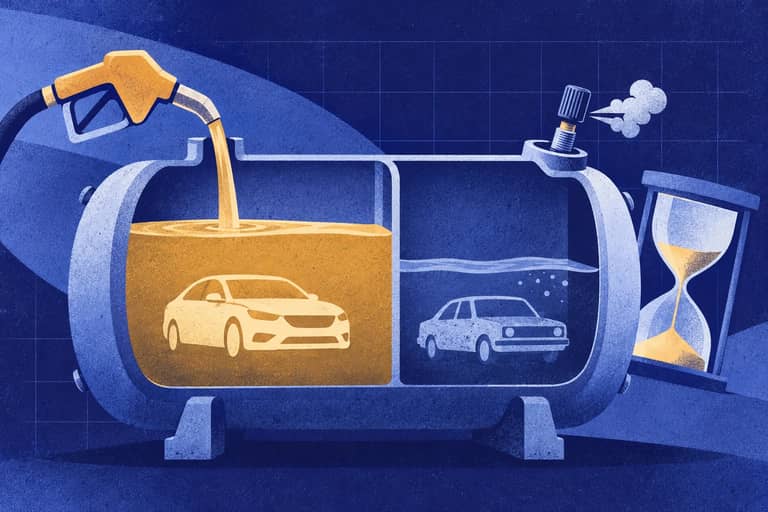
South Korea's automobile exports totalled $6.05 billion in September 2026, down 5.5% year on year. Average daily automobile exports rose 5.5% year on year.
New-car exports increased 4.4% to $5.60 billion, while used-car exports declined 56.8% to $450 million. Automotive parts were reported separately at $1.77 billion, down 7.2%.
Data note: September 2026 figures are provisional customs-clearance data through September 30.
September Automobile Export Value Fell
The comparison is against September 2025 and measures export value for the automobile category on a customs-clearance basis, as reported by the ministry.

A decline in monthly value indicates that less export value cleared customs during the calendar month than in the same month one year earlier. The monthly total alone does not show whether fewer goods moved per working day or whether fewer working days were available, so the ministry provided an average daily measure alongside the monthly total.
Average Daily Exports Rose Despite the Monthly Decline
Average daily automobile exports rose 5.5% year on year in September 2026, pointing in the opposite direction to the monthly value.
The number of working days was 2.5% lower than in September 2025 because of the holiday-calendar comparison. The briefing text does not give an actual working-day count. The ministry attributed the monthly decline partly to the shift in Chuseok timing and weak used-car exports.
New-Car Gains Contrasted With the Used-Car Slump
New-car exports were $5.60 billion in September 2026, up 4.4% year on year. Used-car exports were $450 million, down 56.8% year on year. New cars accounted for most of the automobile export value, while used cars accounted for a smaller portion.
The table below summarises the September 2026 automobile export values and the separately reported automotive-parts value.
| Category | Export value, September 2026 | Year-on-year change |
|---|---|---|
| Automobiles, total | $6.05 billion | down 5.5 percent |
| New cars | $5.60 billion | up 4.4 percent |
| Used cars | $450 million | down 56.8 percent |
| Automotive parts, reported separately | $1.77 billion | down 7.2 percent |
The chart below shows the two components of vehicle export value for the month.
Data Table
| Category | Export value |
|---|---|
| New cars | 56 |
| Used cars | 4.5 |
Source: Ministry of Trade, Industry and Resources (MOTIR).
The contrast between the two segments explains much of the headline result. Growth in new-car value was offset in the monthly total by the scale of the used-car decline. The divergence also indicates that conditions differed by vehicle type rather than affecting all automobile exports in the same manner.
What the Ministry Says About the Used-Car Decline
The ministry reports new and used cars separately within South Korea's automobile export category. Separate reporting makes the source of change visible. In September 2026, the used-car segment was the source of weakness within an otherwise higher new-car result.
The ministry says used-car exports fell amid the Middle East war and restrictions on used cars in major countries. Those two factors were cited in the September 2026 report as context for the used-car decline. No additional country-level or model-level breakdown was provided in the facts available for this article.
For vehicle traders, the distinction matters because weakness was concentrated in the used-car segment while new-car value increased. The September data therefore require segment-level tracking rather than reliance on the automobile total alone.
Automotive Parts and the Wider Trade Picture
Automotive-parts exports were reported separately from automobile exports at $1.77 billion, down 7.2% year on year in September 2026. Parts are therefore not included in the $6.05 billion automobile total. The distinction preserves comparability between complete vehicles and components.
The separate parts figure shows that the September decline was not limited to complete vehicles. Both automobiles and automotive parts recorded lower monthly export value than one year earlier. The parts decline was smaller in percentage terms than the used-car decline, but larger than the total automobile decline.
Businesses that handle vehicles and parts together need to keep the categories distinct in export records and performance comparisons. The September data show weakness in parts value alongside weakness in total automobile value, while new complete vehicles recorded growth.
Data Basis and Takeaways for Vehicle Traders
The September export figures were based on provisional customs-clearance data through September 30. Automobiles and automotive parts remain separate categories, with new-car and used-car components reported within automobiles.
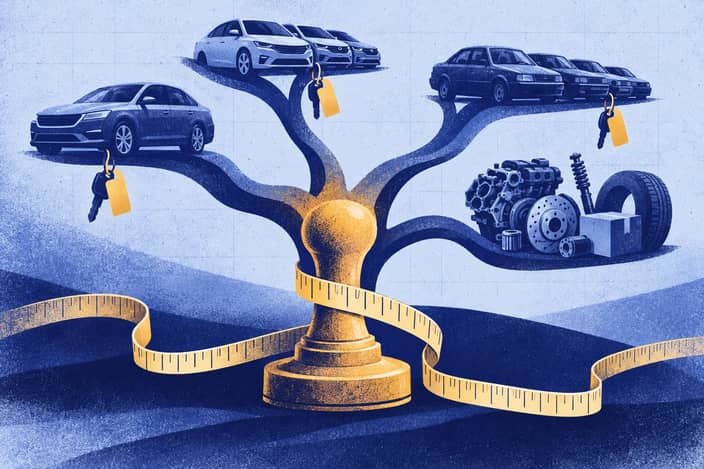
For interpretation, the automobile total, its components and automotive parts need to be tracked on the reporting bases the ministry uses. The daily measure provides the ministry's pace comparison for the calendar month.
Sources
- Ministry of Trade, Industry and Resources (MOTIR) — 2026년 9월 수출입 동향
- Ministry of Trade, Industry and Resources (MOTIR) — September 2026 trade-release attachment
- Korea.kr — 9월 수출입동향
September 2026 data are provisional customs-clearance values through September 30.